
Someone quotes the denial rate at the monthly meeting and nobody in the room trusts it. Collections are soft, the same reason codes keep coming back, and the number has not moved in a year because nobody agrees on what it counts. Two practices with identical operations can report very different rates, so a denial rate benchmark by specialty only helps once your own number is measured the same way.
What the free denial scorecard looks like
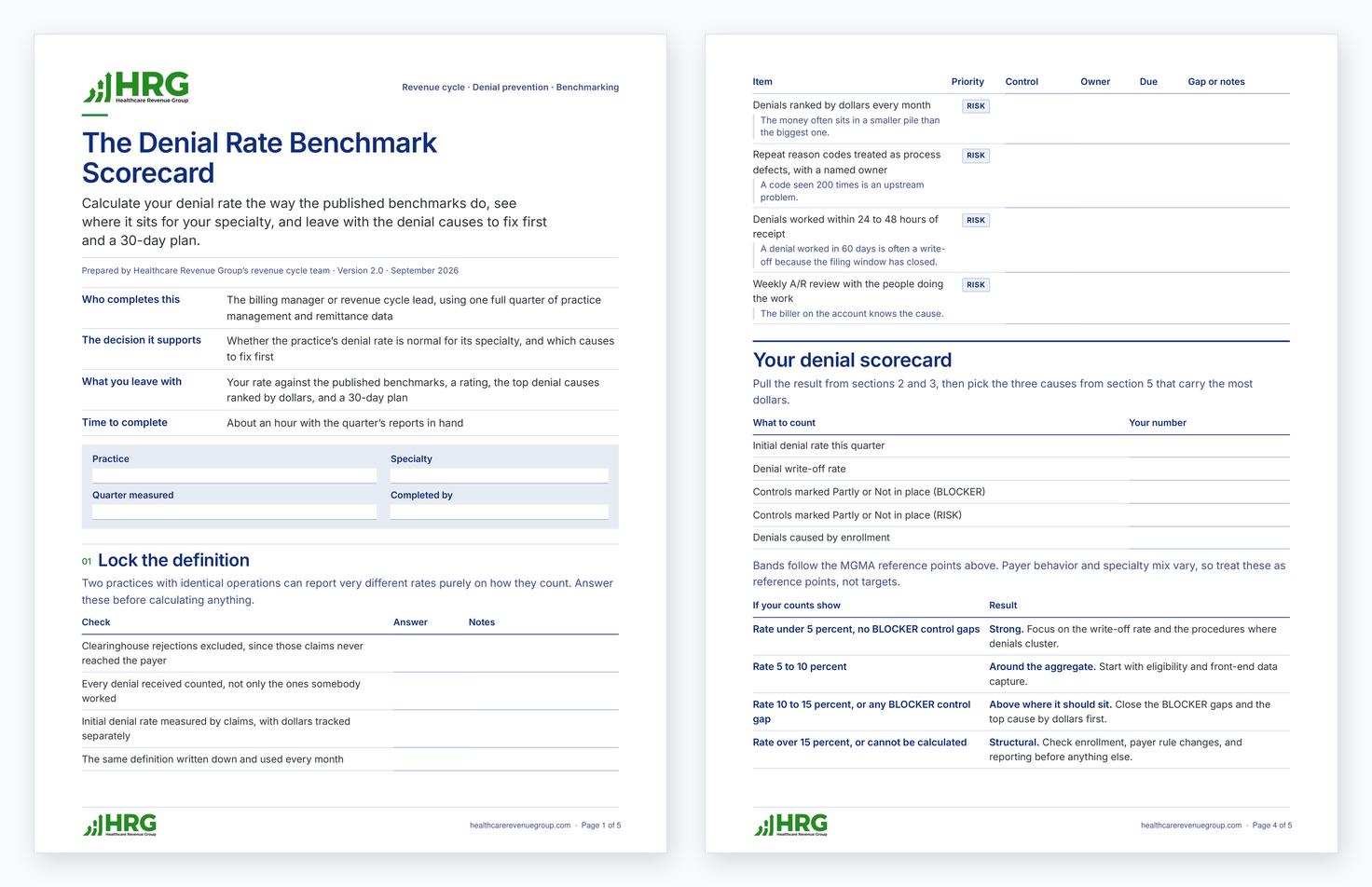
Page one sets who completes it and the decision it supports. The scorecard page turns one quarter of data into a rating and the three causes to fix first.
What the published denial benchmarks measure
8 percent
The single-specialty rate of claims denied on first submission in MGMA's 2023 DataDive data, unchanged from 2019. MGMA's Better Performers ran 1.5 to 5 points lower, depending on practice type.
Specialty moves the number as well. Cardiology denial rates run above 22 percent against a healthcare average closer to 7 percent, and dermatology runs at 14 percent against a 5 percent industry average. Each of those averages measured a different population, so match definitions before you compare. Procedure-heavy practices carry modifier and bundling exposure, drug-heavy practices carry medical necessity exposure, and a growing practice carries enrollment denials that billing alone cannot fix.
What is inside the free denial scorecard
- A four-question check that locks your definition first, so clearinghouse rejections and unworked denials stop skewing the rate
- Ten measures to calculate from one quarter of data, including the denial write-off rate, the one that measures actual loss
- Six structural drivers that explain why your specialty sits above or below the aggregate, and a worksheet that ranks denial causes by dollars
- Seven controls marked BLOCKER or RISK, a denial rating, your top three gaps, and a 30-day plan with an owner on every step
It is a 5-page fillable PDF for the billing manager or revenue cycle lead. Plan on about an hour with the quarter's reports in hand.
How HRG brings denials down
HRG's U.S.-based billers scrub every claim before it goes out and work each denial within 24 to 48 hours of receipt, while it is still inside the filing window. The billers on the account run the weekly and monthly A/R reviews themselves, so a repeat reason code gets traced back to the step that caused it. Across the accounts HRG manages, documented outcomes run to a 15 to 30 percent reduction in denials, and the work happens inside a set of supported EHR and practice management systems. Read more about HRG's medical billing services.
35 percent fewer denials
A Kentucky pain management clinic, burned by its last billing company, cut denials 35 percent within a few months of moving to HRG, while A/R fell 20 percent and collections rose 40 percent. Read the A/R case study.
Before you download
Who is the denial scorecard for?
Billing managers, revenue cycle leads, and practice administrators who want to know whether a high denial rate is a real problem or a counting problem. It works from reports your practice management system already produces.
How long does it take?
About an hour with one full quarter of practice management and remittance data. Rerun it each quarter with the same definition, and the trend tells you more than any single benchmark.
Does HRG do our coding?
Coding stays with your coders or coding vendor, and HRG provides coding consultation as needed. HRG's billers work the denials that come back and trace each repeat reason code to where it starts.
Do we have to switch EHR systems to work with HRG?
HRG works inside a set of supported EHR and practice management systems. A short call confirms whether yours is one of them.
Get the free Denial Rate Benchmark Scorecard
"Having worked with HRG for over 15 years, I can personally attest to their expertise, professionalism, and unwavering commitment to client success."Jessica Poveda, FAU Community Health Center
Enter your name and work email, and the download link appears right away. Tick the box if you'd also like occasional billing guidance by email from HRG's team. You can unsubscribe at any time.