
The hire was the right call. Three months in, the schedule is full, the bank balance is worse, and someone starts asking whether the new provider is producing. The provider sat unbillable for weeks while payers caught up, and month three is exactly when the new provider revenue ramp looks its worst.
What the free ramp planner looks like
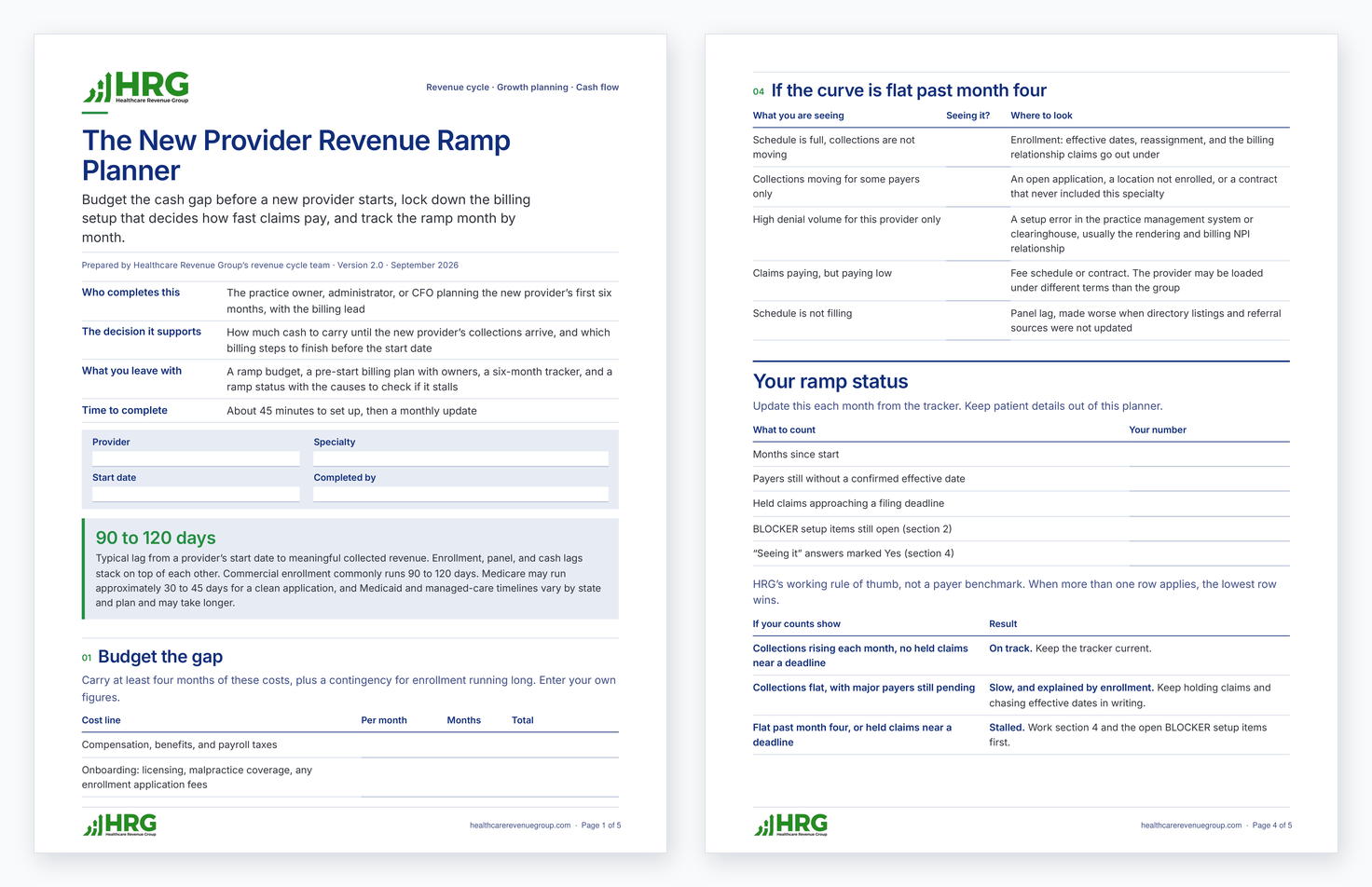
Page one sets who completes it and the decision it supports. The ramp status page tells you each month whether the ramp is on track, slow, or stalled.
Three lags stack on top of each other
90 to 120 days
Typical lag from a provider's start date to meaningful collected revenue. Commercial enrollment commonly runs 90 to 120 days. Medicare may run approximately 30 to 45 days for a clean application, and Medicaid and managed-care timelines vary by state and plan and may take longer.
Enrollment belongs to the payers, the panel fills gradually, and even a clean claim takes weeks to pay. MGMA's 2021 guidance is to start credentialing when the employment agreement is signed, and the practices that come through the ramp calmly are the ones that did that and budgeted for the gap. For the credentialing side of the same hire, see HRG's new provider credentialing checklist.
What is inside the free ramp planner
- A ramp budget for the costs to carry for at least four months, with a contingency line for enrollment running long
- Ten billing setup steps to finish before the start date, five of them BLOCKERs, from effective dates in writing to EFT and ERA
- A six-month tracker with seven measures, so the month-three conversation starts from data
- A stall check for a curve still flat past month four, a monthly ramp status, your top three gaps, and a dated action plan
It is a 5-page fillable PDF. Plan on about 45 minutes to set it up, then a short monthly update.
How HRG shortens the ramp
HRG's U.S.-based billers set up clearinghouse connections inside your existing systems and get claims out within 48 hours of service. Denials get worked within 24 to 48 hours, so a setup error caught in week two does not become a pattern by month four. Credentialing and billing are two separate HRG service lines, and when a practice uses both, the two teams work the same new provider on one timeline. The billing runs inside a set of supported EHR and practice management systems, and HRG's medical billing page shows how.
100 percent in 120 days
A St. Louis podiatrist who left a larger group to launch independently reached 100 percent of the former group's revenue within 120 days, with HRG handling credentialing, payer contracting, and billing setup. Read the new practice case study.
Before you download
Who is the ramp planner for?
Practice owners, administrators, and CFOs planning a new physician or non-physician practitioner's first six months, working alongside the billing lead.
How long does it take?
About 45 minutes to set up the budget and the billing steps, then a monthly update from the tracker.
Can HRG handle both credentialing and billing for a new provider?
Yes. HRG's credentialing and billing teams work separately, and together on a new provider when a practice uses both.
Will we have to change EHR systems?
HRG works inside a set of supported EHR and practice management systems. A quick call confirms whether yours is one of them.
Get the free New Provider Revenue Ramp Planner
"Their approach is both professional and highly personalized, making complex processes seamless and manageable, even for a small practice like ours."Tara Roney, HRG client
Enter your name and work email, and the download link appears right away. Tick the box if you'd also like occasional billing guidance by email from HRG's team. You can unsubscribe at any time.