
Medicaid Credentialing: State-by-State Basics
Published by Mellissa Harmon, VP of Provider Services, Healthcare Revenue Group | CPCS-Certified on
Aug 3, 2026, 9:45:00 AM
TL;DR Medicaid credentialing is not one process. It is 50-plus separate state programs, each with its own portal and rules. PECOS covers Medicare, not Medicaid, and mixing the two causes real delays. Group practices also need separate MCO enrollment, on top of state enrollment. Missed revalidation can shut off payment entirely.
Medicaid credentialing looks simple on paper and gets complicated fast. A group practice expects one enrollment process. Instead, it finds 50 different state programs, each with its own portal and screening rules. Add Medicaid managed care organizations on top of that. One provider can need six separate applications in a single state. None of this shows up if you assume Medicaid credentialing works like Medicare.
If your practice handles credentialing and contracting in-house, this confusion probably sounds familiar. This guide breaks down PECOS versus Medicaid and MCO double enrollment. It also covers what that means for FQHC wraparound payments.
A note on scope. NPDB queries and credentialing committee decisions stay with the practice. Exclusion screening, privileging approvals, and FTCA deeming work the same way, under federal and HRSA guidelines. A credentialing partner like HRG supports the surrounding workflow, including documentation, tracking, payer follow-up, and reporting. The practice retains authority over decisions that require its direct attestation.
Why Medicaid Credentialing Is Fifty Programs, Not One
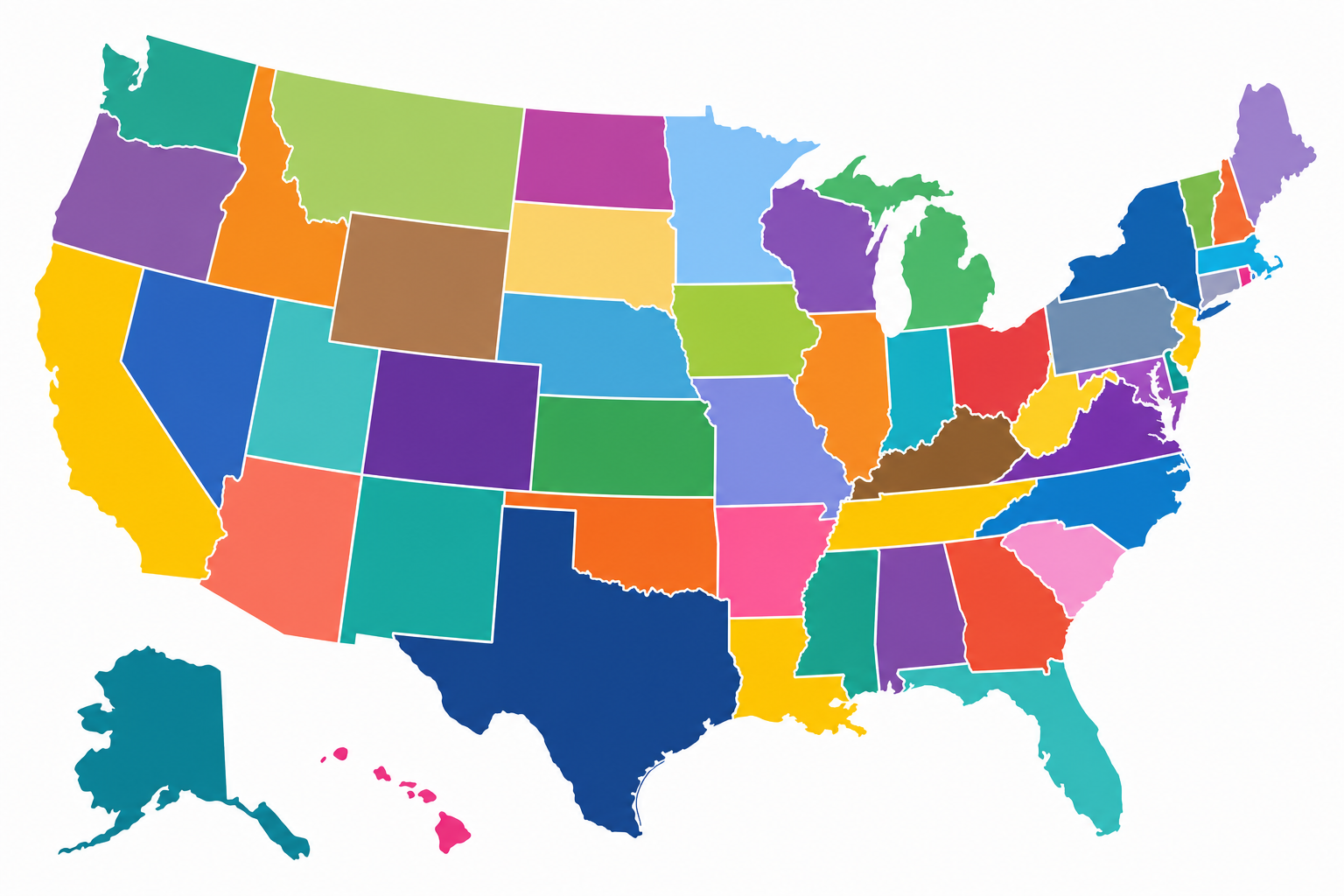
Medicaid credentialing runs through more than 50 separate state programs. Each state builds its own portal, screening rules, and revalidation cycle. New York runs Medicaid enrollment through eMedNY, one of the more document-heavy systems in the country. Georgia runs its own system, GAMMIS, with different rules entirely.
Here is the confusion that trips up almost every group practice. PECOS is CMS's enrollment system for Medicare. PECOS does not enroll providers in Medicaid. A practice that assumes PECOS covers Medicaid will see claims denied fast.
Multi-state group practices feel this hardest. Each state means a separate enrollment cycle, a separate portal login, and separate screening rules. Growth into a new state means starting the whole process over.
The Double Enrollment Trap: State Medicaid vs. MCO Credentialing
Getting credentialed with a state Medicaid agency does not automatically enroll a provider with the managed care organizations covering most Medicaid patients. This catches practices off guard constantly.
- State enrollment covers fee-for-service Medicaid only. It does not extend to any MCO network automatically.
- Each MCO requires its own application. A provider in a state with five MCOs may need six total applications. That means one for the state and five for each MCO.
- Federal rule backs this up. Under 42 CFR 438.602, states must screen and enroll Medicaid MCO network providers directly. This enrollment happens separate from any MCO-specific application.
Skip one MCO application, and every claim to that MCO risks denial. That is true no matter how clean the documentation is.
Medicaid Revalidation: The Five-Year Clock You Cannot Ignore
Medicaid credentialing does not end at approval. Federal regulation requires state Medicaid agencies to revalidate every enrolled provider at least every 5 years. This applies regardless of provider type. Miss the deadline, and the state can disenroll the provider entirely.
Watch this clock. Providers typically get a revalidation notice 180 days before the due date. They then have 60 days to respond.
Stale contact information is one of the quietest ways this goes wrong. An old address or an unchecked inbox can burn through that 60-day window fast. Nobody notices until the deadline has already passed.
Worth watching closely: in April 2026, CMS leadership directed governors and state Medicaid directors to act. States must now submit two-year provider revalidation strategies. High-risk providers may now face revalidation more often than the standard 5-year cycle. This has not settled into fixed rules, but it signals tighter timelines ahead.
The federal screening and revalidation requirements live in 42 CFR Part 455, Subpart E. It governs how states screen, enroll, and revalidate Medicaid providers.
Wraparound Payments: Why FQHC Credentialing Gaps Cost More
FQHCs face a sharper version of this problem. A wraparound payment covers the gap between the MCO payment and the FQHC's full PPS rate. Federal law requires FQHCs receive at least that PPS rate. The state Medicaid program pays the difference.
Credentialing gaps hit FQHCs harder because of how PPS works. A claim billed under a provider not yet credentialed with that MCO is a denial. That denial applies to every visit the provider saw during the gap, not just one claim. A credentialing gap baked into the numbers makes wraparound reconciliation messy fast.
NACHC's guidance on wraparound payments lays out the federal requirements behind this structure. HRG's health center credentialing services track MCO credentialing status specifically for this reason. Wraparound reconciliation should never inherit a credentialing gap nobody caught.
Where Group Practices Get Stuck
A handful of preventable mistakes account for most Medicaid credentialing delays.
- Assuming PECOS covers Medicaid. This single assumption causes some of the longest delays.
- Treating MCO enrollment as automatic. Each MCO needs a separate application, every time.
- Letting contact information go stale. A missed revalidation notice can trigger disenrollment.
- Underestimating state-specific quirks. A process that works in one state can fail entirely in another.
- Waiting to start enrollment in a new state. Growth outruns credentialing faster than most practices expect.
Each mistake is fixable. A denied claim is usually the first sign something went wrong.
In-House vs. Offshore Billing vs. HRG for Medicaid Credentialing
|
In-house team |
Offshore vendor |
HRG |
|
|---|---|---|---|
|
State-by-state tracking |
Depends on staff bandwidth and turnover |
Limited familiarity with U.S. state systems |
Tracked directly, portal by portal, state by state |
|
MCO enrollment coordination |
Often missed until a claim denies |
Rarely coordinated with state timelines |
Managed alongside state enrollment from day one |
|
Revalidation monitoring |
Easy to miss without dedicated tracking |
Not typically monitored |
Deadlines tracked so a notice never goes unanswered |
|
Where the work happens |
Your own EHR and PM system |
Separate systems, handed off overseas |
Directly inside your existing EHR, PM system, and payer portals |
|
Contract terms |
N/A |
Often long-term, hard to exit |
No long-term contracts, invoiced for time used |
How HRG Handles Medicaid Credentialing
HRG has spent 26+ years inside the state-by-state Medicaid maze. Yes, HRG has seen every version of the double enrollment trap.
Here is what that looks like in practice:
- State-by-state tracking. Every state portal gets its own tracking, since no two states run the same system.
- MCO coordination. State and MCO applications move together as one coordinated project, not two fire drills.
- Revalidation monitoring. HRG tracks every revalidation deadline so a 60-day window never closes unanswered.
- U.S.-based team. A 100% U.S.-based team handles every application, with no offshore handoffs.
- Billers who work your claims. Weekly and monthly A/R reviews come from the actual billers, not a summary from a manager.
- No long-term contracts. You pay for hours used, with no minimum term.
- Coding stays in scope. HRG audits and verifies coding accuracy, and your coders still own the codes.
Medicaid credentialing works best when every application, state or MCO, moves on one tracked schedule.
"HRG has been an invaluable partner," says Tara Roney of Westech. Her team turned to HRG when in-house tracking could not keep pace with growth.
Ready to Simplify Your Medicaid Credentialing?
If state portals and deadlines have your team stretched thin, a coordinated partner helps. HRG works inside your existing systems, with no long-term contract and no minimum hours. Schedule a conversation with Mellissa Harmon to find out where your practice is losing time.
Medicaid Credentialing: Frequently Asked Questions
Does PECOS cover Medicaid enrollment?
No, and this is the single most common mix-up group practices make. HRG tracks each state's separate Medicaid enrollment system individually for its clients.
Do I need to enroll with Medicaid MCOs separately from the state?
Yes, and this catches many practices off guard. Each MCO needs its own application, and HRG manages both tracks together.
How often does Medicaid revalidation happen?
Federal rule requires revalidation at least every 5 years. High-risk providers may now face shorter cycles under new 2026 CMS direction. HRG tracks each client's revalidation deadline well before the notice arrives.
What happens if a Medicaid provider misses revalidation?
The state can disenroll the provider, cutting off Medicaid payment entirely. HRG monitors deadlines and required documentation so a lapse does not happen on a client's file.
How does a Medicaid credentialing gap affect FQHC wraparound payments?
A claim billed under a provider not yet credentialed with an MCO is a denial. That denial can affect every visit during the gap, complicating wraparound reconciliation. HRG tracks MCO credentialing status specifically to prevent this for FQHC clients.
Should a group practice handle Medicaid credentialing in-house or outsource it?
Many practices manage it in-house until multi-state growth or MCO complexity outpaces staff bandwidth. HRG offers portal-by-portal tracking with no long-term contract, so practices can test the fit.
Does HRG perform coding as part of Medicaid credentialing support?
No. HRG audits and verifies coding accuracy as part of the billing workflow. The practice's coders or coding vendor still handle the coding itself.
Medicaid Credentialing Deserves a State-by-State Strategy
Medicaid credentialing cannot run on a one-size-fits-all playbook. Fifty states, separate MCO tracks, and a tightening revalidation cycle all demand dedicated tracking. For FQHC-specific credentialing needs, see HRG's FQHC credentialing requirements guide.